A habit frugal people rarely think twice about
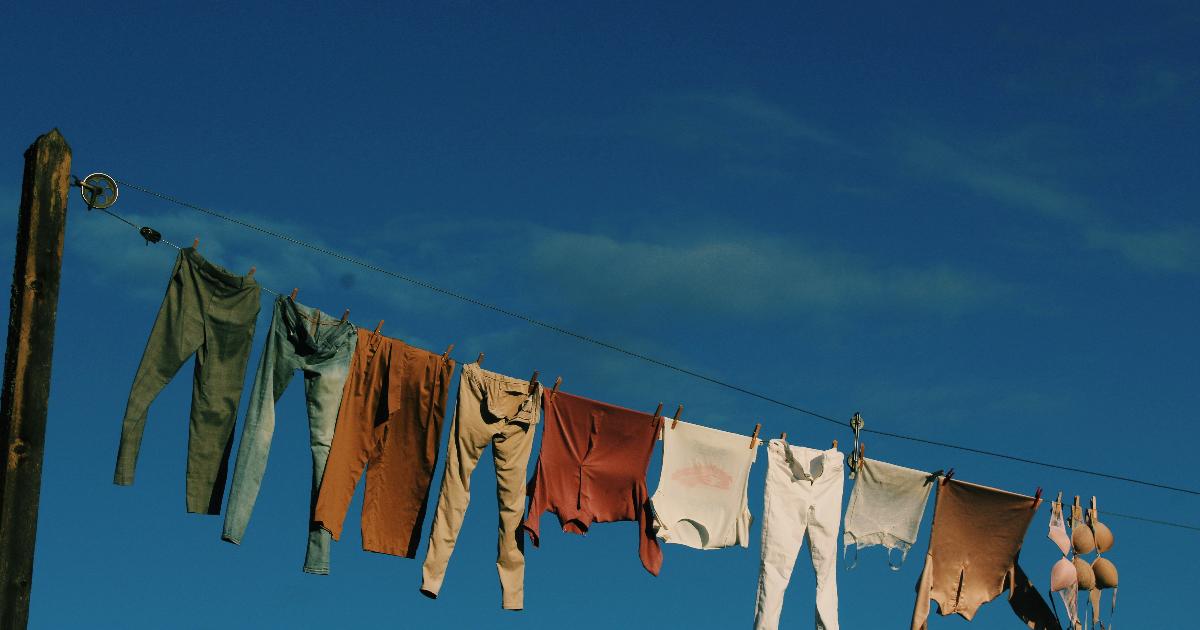
Personal finance writers sometimes round up the money habits that quietly separate frugal households from everyone else — reusing containers, hunting yard sales, stretching a nearly empty condiment bottle. Hanging laundry out to dry shows up on that kind of list too, framed less as deprivation and more as routine maintenance: it can lower utility bills and, as a side benefit, keep fabric from breaking down as fast under repeated heat exposure. That second point matters as much as the first. A tumble dryer doesn’t just cost you in electricity; the heat and tumbling action gradually wear down fibers, which is part of why some clothes seem to fade or thin out faster than others.
None of this means air-drying is automatically the better choice for every household. The size of the payoff depends heavily on what kind of dryer you already have, how much you use it, and whether you replace that dryer heat with some other form of energy.
What actually moves the needle on savings
The honest answer to "how much could I save?" is: it depends on your dryer. A modeling tool that compares a full year of machine-only drying against a mixed routine found that swapping a few loads a week for line-drying can meaningfully change the annual bill — but the size of that change varies a lot by dryer type. Older conventional electric dryers use the most energy per load, so shifting loads away from them tends to save the most. Efficient heat-pump dryers already use far less energy, so the same swap saves less in dollar terms, even though the habit itself hasn’t changed.
| Dryer type | Typical energy per load | Annual saving from shifting ~60% of loads to a line* | What can shrink the saving |
|---|---|---|---|
| Conventional vented electric | About 3.3 kWh | Roughly $97 | Running a fan or dehumidifier indoors |
| Gas dryer | About 0.22 therm + 0.25 kWh | Roughly $67 | High touch-up drying to soften stiff fabric |
| Heat-pump electric | About 1.5 kWh | Roughly $44 | Already efficient, so less room to save |
*Based on a household doing 5 loads a week, with modeled utility rates; your own results depend on your dryer’s actual energy use, your local rate, and how often you actually follow through.
The pattern is worth sitting with: the less efficient your current dryer, the more a clothesline or drying rack tends to help your budget. If you already own a newer, efficient machine, air-drying may still be worthwhile for clothing longevity, but the dollar savings will likely be smaller.
The part that erases savings if you ignore it
This is where the habit gets nuanced instead of automatic. Drying clothes indoors releases moisture into your home. If you compensate with a running fan or a dehumidifier to keep humidity in check, that appliance is now using electricity too — and depending on how long it runs, it can eat into or even wipe out what you saved by skipping the dryer. This isn’t a reason to avoid indoor drying; it’s a reason to notice what "free" actually costs when you add a machine back into the picture.
A few other everyday factors shift the math as well:
- How wet the clothes are going in. A washer’s fastest appropriate spin cycle removes water mechanically, which shortens drying time however you finish the job.
- Airflow. A lint filter clogged with fuzz forces a dryer to work harder and can raise fire risk, so cleaning it regularly helps efficiency whether or not you air-dry at all.
- Ventilation. Indoor drying in a poorly ventilated room can contribute to lingering dampness, so cracking a window or running an exhaust fan matters more than people expect.
- Local rules. Some rental agreements or homeowner association rules limit visible outdoor clotheslines, so it’s worth checking your own lease or bylaws before setting one up rather than assuming it’s allowed everywhere.
A simple way to decide, load by load
Rather than treating air-drying as an all-or-nothing pledge, it helps to think of it as one more option alongside the dryer — something you reach for when conditions cooperate.
flowchart LR
 A[Check weather and space] --> B{Good conditions to air-dry?}
 B -->|Yes| C[Air-dry outside or on a rack]
 B -->|No| D{Need clothes fast?}
 D -->|Yes| E[Use the dryer]
 D -->|No| F[Dry indoors with ventilation]
This keeps the decision light: no calendar, no tracking app, just a quick check each laundry day.
Making it stick without overthinking it
The reader takeaway isn’t "buy a clothesline and never use your dryer again." It’s smaller and steadier than that: try air-drying a handful of loads a week when your space, weather, and schedule allow it, and let the dryer handle the loads where speed or bad weather makes sense. Over months, that small, repeated choice can add up to a real line item saved — though the exact number depends on your dryer, your electricity rate, and how faithfully you keep at it.
The clothesline’s real appeal isn’t nostalgia. It’s that it turns an invisible recurring expense into something you can see, adjust, and gradually shrink — one load at a time.