Money Habits

Clear breakdowns of everyday money habits that help bring order to personal finances. This category includes practical tips, gentle behavior changes, and examples of common day-to-day financial situations.

A person comparing budgeting app dashboards on a laptop, highlighting the best money app for habits and planning
Money Habits

Empower or Monarch: Which Money App Actually Fits Your Habits?

If you’ve ever opened a budgeting app once, felt a flicker of motivation, and then never logged in again, you already know the real problem isn’t the software — it’s whether the tool matches how you actually behave with money. That’s the question worth asking before comparing Empower and Monarch Money feature by feature: not “which app is better,” but “which app fits the habit I’m actually trying to build?”


A family reviewing household bills and a savings plan at the kitchen table to build better family budgeting habits
Money Habits

Small Habits, Steadier Budget: A Calm Guide to Everyday Family Savings

Most household budgets don’t fall apart because of one big mistake. They fray at the edges — a subscription nobody remembers signing up for, a renewal quote that quietly crept up, a takeaway ordered because nothing was planned for dinner. None of these things feels dramatic on its own. Together, they can make a family’s money feel harder to control than it needs to be. The good news is that fixing this rarely requires a total overhaul. It usually just needs a few habits, repeated often enough that they become normal.

A notebook, phone, and calculator showing a side hustle budget and income tracking setup
Money Habits

Small Side Hustles, Big Trade-Offs: A Calm Guide to Making Money on Your Schedule

Somewhere between “I need extra cash” and “I don’t have time for another job” sits the real question most people are actually asking: which small side-income idea will fit into the life I already have, without quietly taking it over? A blogger who spent two decades testing extra-income ideas recently laid out nine ways she has personally earned pocket money — from background-running apps to dog boarding to reviewing receipts. None of them will replace a paycheck. But looked at together, they reveal a pattern worth borrowing: the options that actually work for beginners are the ones with low friction, not the ones with the biggest headline number.

Small business owner reviewing cash reserves and expense records at a desk
Money Habits

How Much Cash Should Your Business Actually Keep on Hand?

You check your business bank account, see a comfortable-looking number, and feel a small wave of relief. But is that relief earned? Part of that balance might already be owed to the tax office. Part might be the buffer that keeps payroll running if a client pays late. And part might be money that’s just sitting there, doing nothing in particular. A healthy-looking balance can hide an unhealthy structure — and that’s the real question worth asking, not “is my number big enough?”

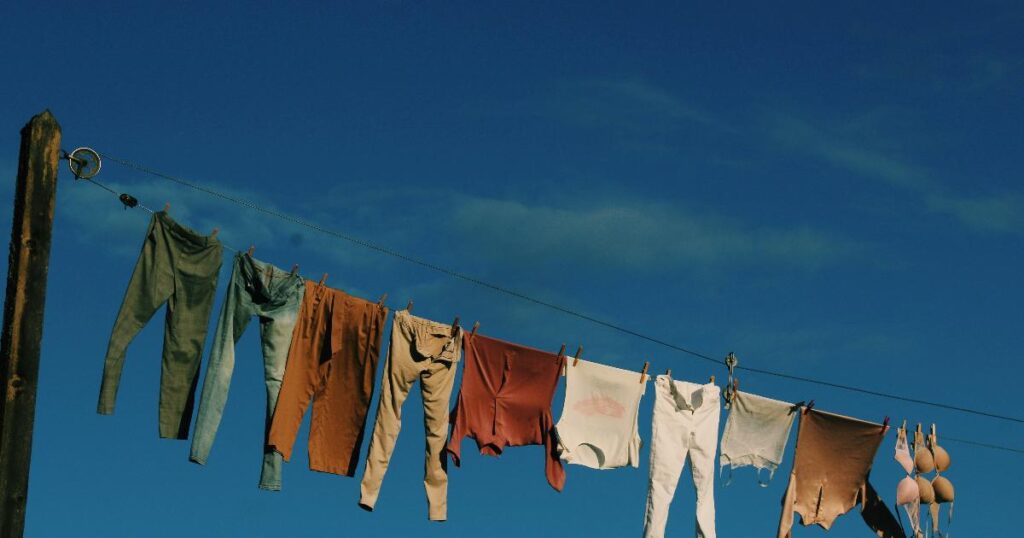
A clothesline with freshly washed shirts drying outdoors, illustrating a clothesline habit that can lower utility bills.
Money Habits

The Clothesline Habit: A Small Money Move Hiding in Plain Sight

A clothesline sounds like something from your grandmother’s backyard, not a modern money strategy. But strip away the nostalgia and you’re left with a simple mechanical fact: every load of laundry you don’t run through a heated dryer is a load that didn’t burn electricity or gas. That’s not a lifestyle statement — it’s arithmetic. And arithmetic, applied consistently, is what turns a small habit into a noticeable dent in a household bill.

Scroll to Top