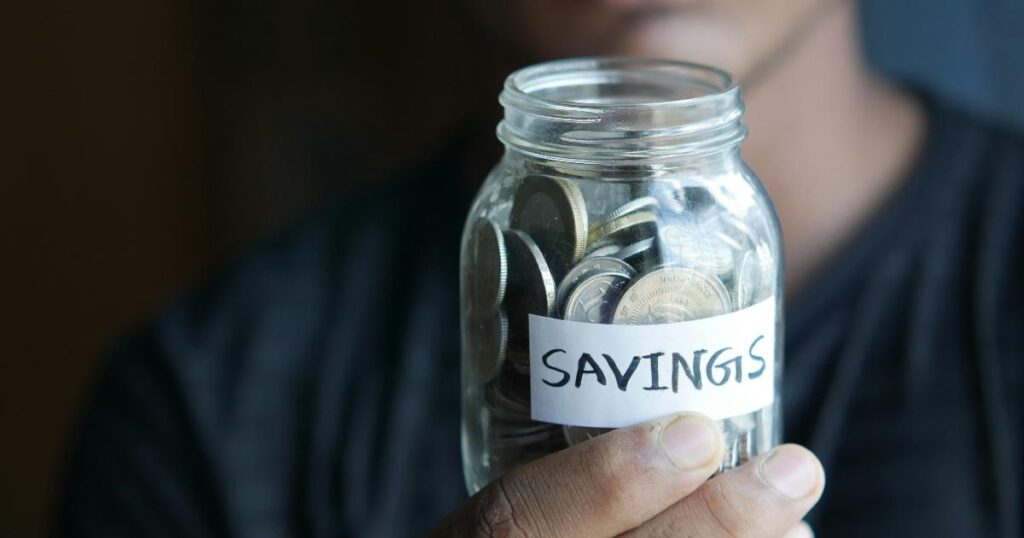
What if the solution wasn’t a bigger budget or a stricter plan — but a small, repeatable rule that turns an everyday spending moment into an automatic savings action?
That’s the idea behind savings challenges. Not as magic fixes, but as behavior tools: simple structures that help you move money before you spend it, one small decision at a time.
Why Saving Feels So Hard to Start
Before choosing a challenge, it helps to understand why saving stalls in the first place. Research on real-life savings behavior shows that saving is not a single decision — it’s a process with distinct stages. First, you need to decide to start. Then you need to actually make that first deposit. Then you need to keep going. Each stage has its own friction, and a plan that fails to lower that friction at each step is likely to stall before it builds momentum.
Self-control matters during the ongoing phase, while your confidence in a specific goal matters most at the start. Goals that feel achievable are more likely to lead to a first deposit, while more ambitious goals — once started — can actually inspire higher contributions. That’s a useful tension to understand: starting small is better than not starting at all, and visible progress is what keeps you going.
Savings challenges work with this psychology. They replace the vague instruction "save more" with a specific, repeatable trigger: if this happens, move this amount. That clarity is what makes them useful — especially for readers who don’t have a big surplus to work with and need a low-friction starting point.
The "Harvest" Approach: Finding Savings in Spending You’re Already Doing
One of the most practical categories of savings challenges doesn’t ask you to spend less. Instead, it asks you to capture money you were effectively saving through discounts, downsizing, or subscription cuts — and make it real by actually moving it to savings.
Here’s the key insight: when a store tells you that you "saved $15 at checkout," you’re not actually $15 richer unless you move that $15 into savings. The discount is only real money if you redirect it.
Some examples of harvest-style challenges:
- The Bank It challenge — Every time you use coupons or find sale items at a store, move the amount shown as "savings" on your receipt into a savings account. The money was already part of your shopping budget. Now you’re keeping it.
- The Subscription Harvest — Cancel one subscription you barely use, then set up an automatic transfer for that exact monthly amount into savings. You won’t feel the loss in your lifestyle; you’ll feel it in your balance.
- The Downsize Challenge — Swap one item to a smaller size or lower tier (a coffee drink, a streaming plan, a data package). Calculate the price difference and redirect that gap into savings each time.
A word of caution on cashback and coupon tools: apps like cashback services can be useful for redirecting small amounts into savings, but they depend on real purchases and specific program terms, and they aren’t a fit for everyone. The core idea of harvest challenges works just as well with plain store receipts and no apps required.
The Flow: From Spending Choice to Savings Action
Every savings challenge follows the same repeatable logic, regardless of its type:
flowchart TD
 A[Spending trigger occurs] --> B[Apply rule: coupon, skip, downsize, or cashback]
 B --> C[Calculate the redirected amount]
 C --> D[Move that amount to savings]
 D --> E[Note the progress and repeat]
This loop is the real value of a challenge. It converts a momentary spending decision into a deliberate savings action — and repetition is what builds the habit.
Dollar-Based Challenges: When the Budget Is Tight
If your budget is already stretched, harvest challenges might not generate much to redirect. In that case, dollar-based challenges offer a way to start without needing large sums. Even a small, consistent action — $1 here, $1 there — creates a habit of moving money to savings, which is the foundation for doing it on a larger scale later.
Some options:
- The $1 No Fast Food challenge — Each time you skip takeout and cook from home instead, put $1 into a savings jar or account. You also save on the meal itself.
- The $1 Weather Prediction challenge — Pick sun or rain each day. Whenever your prediction is correct, transfer $1 to savings. It’s a small amount, but the daily habit matters more than the dollar.
- The Quarter Multiplier — Every quarter that enters your life, transfer $1 (four times the quarter) into savings.
These challenges work best as starting points. They won’t solve deep budget problems on their own, and if your expenses consistently exceed your income, finding ways to reduce costs or increase income is a more urgent step than any savings challenge. But if you have even a small margin, these are ways to use it intentionally.
Choosing the Right Challenge for Your Situation
Not every challenge fits every life. The table below maps challenge types to different spending styles and circumstances:
| Challenge Type | Best Fit | How It Works | Key Benefit | Watch Out For |
|---|---|---|---|---|
| Harvest (receipts/coupons) | Regular grocery/store shoppers | Redirect "discount" amounts to savings | Uses money already in your budget | Requires discipline to actually transfer |
| Subscription Harvest | People with several monthly subscriptions | Cancel one; auto-transfer that amount | Fully automatic after setup | Works only if you actually cancel the sub |
| Downsize | Frequent buyers of upgradeable items | Save price difference when trading down | Gradual, barely noticeable | Small per-transaction amounts |
| Dollar-based ($1 rules) | Very tight budgets; beginners | Save $1 per specific daily event | Builds the saving habit cheaply | Won’t add up quickly on its own |
| Gamified (card deck, 90-day) | Motivated savers who enjoy tracking | Fixed visual goal with milestones | Keeps motivation high via visible progress | Requires sustained engagement |
The best challenge is the one you will actually repeat — not the one with the most impressive headline number.
When a Simple Automatic Transfer Beats a Challenge
It’s worth saying plainly: if setting up a savings challenge feels complicated, a plain automatic transfer on payday might be the better tool. Research and financial guidance consistently point to automation as one of the most reliable ways to save, because it removes the moment-of-decision entirely — the money moves before your spending brain notices it.
Savings challenges shine in a specific situation: when someone needs a gentle entry point into the habit of saving, when automatic transfers aren’t yet feasible, or when the visual progress of a challenge helps them stay motivated. But there is no strong evidence that playful challenges are universally superior to automatic transfers — and for many people, a simple recurring transfer set up once is more reliable than any challenge requiring daily attention.
Saving Happens in Stages, Not All at Once
Here’s what matters most: about 51% of Americans say they do not have emergency funds covering three months of expenses, and a growing share feel pessimistic about their finances. That’s not a reason for despair — it’s a reason to make starting as easy as possible.
A savings challenge is not a cure-all for structural budget problems. But it is a low-friction way to begin the first stage that research describes: deciding to start and making that first deposit. After that, the goal becomes keeping the habit alive long enough for it to feel automatic.
Choose one challenge from the list above — the simplest one that fits your actual life right now. Set a rule. Move the first amount. And notice that you did it.
That’s the start of something more durable than a one-time financial decision. It’s the beginning of a habit.
Sources
- Frontiers | Behavioral and contextual determinants of different stages of saving behavior
- 11 Powerful Savings Challenges (Turn Everyday Decisions into Real Money)
- Why Your Brain Sabotages Savings (And How to Fix It)
- Growing share of U.S. adults say their personal finances will be worse a year from now