That simplicity is the whole point. Research on saving behavior consistently points to one theme: the habit matters more than the amount. One UK study found that households who save consistently — regardless of how much — have over 70% lower odds of falling behind on bills than people who don’t save at all, and that even modest savings of a few hundred pounds meaningfully reduce the risk of financial hardship. The dollar itself isn’t magic. What it’s really training is your ability to notice a moment, make a tiny decision, and follow through.
Why starting small actually works
It’s tempting to think that saving only "counts" once you’re putting away real money — $50, $100, a fixed percentage of your paycheck. But that mindset is often what keeps people from starting at all. A common reason people quit saving, according to financial experts, is that they start too big: they commit to an ambitious percentage, the month gets tight, they pull back, and it feels like failure. A $1 challenge sidesteps that trap entirely. It’s hard to "fail" at saving a dollar.
There’s also a psychological mechanic at work: habits stick better when they’re tied to something you already do, not something you have to remember from scratch. A financial planner interviewed about savings challenges points out that the most sustainable changes come from looking closely at your actual spending patterns and building small adjustments around them, rather than imposing a system that ignores how you actually live. That’s why the best $1 challenge isn’t the trendiest one — it’s the one that attaches to a trigger you already encounter regularly.
Choosing a trigger that fits your real life
The $1 challenge comes in several flavors, and each one leans on a different kind of behavior. Picking the wrong one — say, a challenge tied to something you rarely do — means it’ll quietly fade. Picking one tied to a frequent, honest pattern in your life gives it a fighting chance.
| Challenge type | Trigger | Best suited for |
|---|---|---|
| Per-Spend Challenge | Every purchase or transaction, in-store or online | People who make frequent small purchases and want more awareness of spending frequency |
| Pay-Yourself-First Challenge | Any time money comes in — paycheck, refund, rebate, reward | People with multiple income sources or irregular windfalls |
| Impulse-Control Jar | Every time you open a specific app or site you’re trying to use less | People whose spending is driven by scrolling, ads, or impulse browsing |
| No-Fast-Food / Brown-Bag Jar | Every time you cook instead of buying food out | People whose biggest "leak" is eating out or takeout |
| Weather Prediction Challenge | A weather event you choose (rain or sun) | People who want a low-effort, game-like challenge with no spending trigger at all |
Notice that none of these require extra income — they require noticing an existing moment. The per-spend and pay-yourself-first versions plug directly into your normal transactions, which makes them easy to track but also easy to feel in a tight month. The weather or impulse-control versions are gentler because they don’t touch your spending at all; they simply give you a repeatable ritual.
Turning "sometimes" into "automatically"
One reason $1 challenges can fizzle is that they rely on remembering — and remembering is exactly what’s hardest when you’re juggling a tight budget and a busy life. This is where automation, even in a tiny form, helps enormously. Financial guidance on savings habits consistently recommends removing the decision from the equation: a recurring transfer, a round-up feature on a debit card, or a separate account you don’t casually see when checking your spending balance. You don’t need a $1 challenge and a full auto-save system — but borrowing the automation mindset (say, transferring your accumulated dollars to a separate savings account weekly, on a set day) turns a fragile habit into a structural one.
The loop below shows how a $1 challenge works from start to finish, without turning into an overwhelming project:
flowchart TD
 A[Pick one trigger] --> B[Define the $1 rule]
 B --> C[Stash the dollar]
 C --> D[Track it visibly]
 D --> E{Missed a deposit?}
 E -->|No| C
 E -->|Yes| F[Reset, don't quit]
 F --> C
That reset step matters as much as any other. A missed week isn’t a broken challenge — it’s just a missed week. The whole design of a $1 challenge assumes friction and forgetfulness will happen sometimes; the habit survives by continuing, not by being perfect.
When the challenge should bend — or pause
A $1 rule should never compete with rent, groceries, or a utility bill. If a week is unusually expensive — a car repair, a medical copay, a bill that landed wrong — it’s reasonable to pause the challenge rather than squeeze it in anyway. The point isn’t moral consistency; it’s building a pattern you can return to. The U.S. Consumer Financial Protection Bureau frames a savings habit as something built through consistent, monitored contributions and one that flexes with a person’s cash flow — not a rigid obligation that overrides essential spending.
It’s also worth being honest about what this challenge is, and isn’t. A $1 savings habit is not a full financial safety net, and it won’t replace a proper emergency fund or a broader budget. The CFPB describes an emergency fund as a dedicated reserve for unplanned costs like car repairs or medical bills — something built through its own deliberate strategy, whether that’s automatic transfers, cash-flow management, or saving windfalls like tax refunds. Think of the $1 challenge as the on-ramp: it builds the muscle memory of "money aside, regularly," which can later feed into that larger fund once the habit feels natural.
Making progress visible
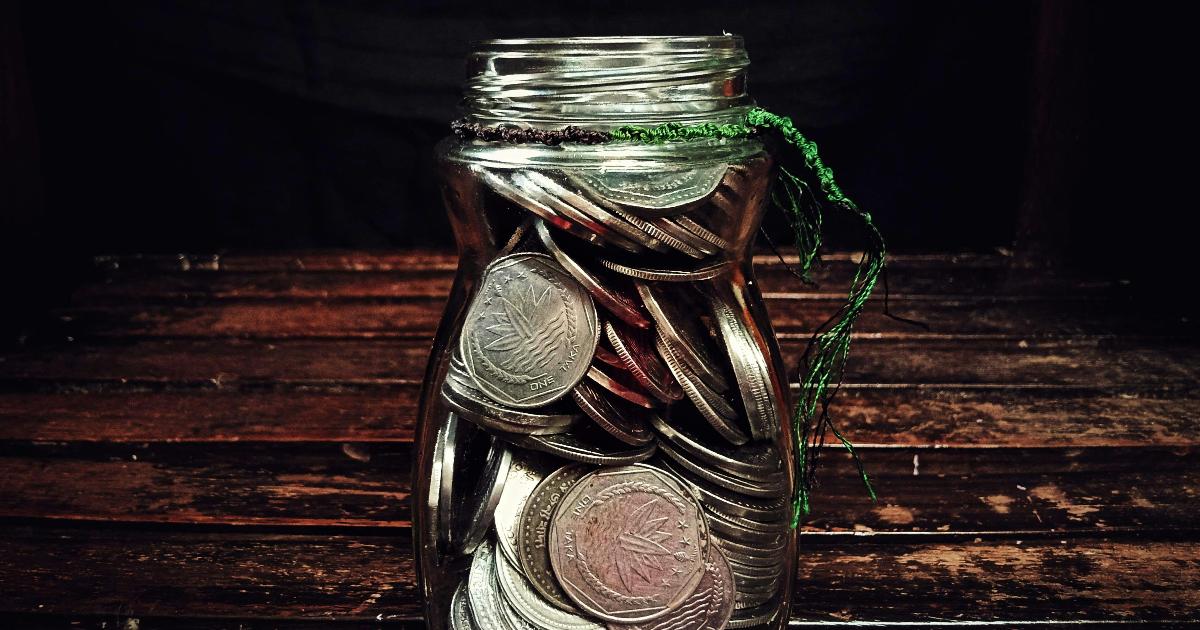
One quiet ingredient behind most successful saving habits is visibility. Whether it’s a jar you can see filling up, a printable tracker you color in, or a savings app balance you check weekly, seeing progress reinforces the behavior in a way that abstract intentions never do. The CFPB’s own guidance on building savings echoes this: regularly monitoring progress — and celebrating small milestones — helps people stick with a savings habit long enough for it to compound. You don’t need anything elaborate. A sticky note on the fridge with tally marks works exactly as well as a fancy spreadsheet.
Start with the dollar you can actually keep
There’s no single "best" $1 challenge, and no version of this exercise that works identically for everyone — someone with irregular gig income will lean differently than someone with a steady paycheck and heavy debt. What matters is choosing one trigger that matches your real habits, giving yourself a visible way to track it, and treating a missed week as a reset rather than a failure. The dollar is small on purpose. The habit it’s teaching you — noticing a moment, making a tiny decision, following through — is the part that’s built to last.
Sources
- Research reveals how small savings build resilience and peace of mind
- Simple Actions That Make Saving Automatic (Even on a Tight Budget)
- 13 Best Savings Challenges to Save Money Each Month
- $1 Dollar Savings Challenge Ideas (Perfect If Money Is Tight)
- An essential guide to building an emergency fund | Consumer Financial Protection Bureau