This isn’t a story about a miracle discount or a trick that erases food inflation. It’s a story about timing, freezing, and honest counting — habits that any household can borrow, regardless of how big the table is.
Why the Planning Window Matters More Than the Shopping List
Canadian grocery prices were reported to be 29% higher in August 2026 than five years earlier, and still climbing nearly 3% over the latest year, even as the pace slowed. Forecasts for 2026 pointed to a further 4% to 6% rise in food costs, which could add close to $995 to an average family’s yearly grocery bill. Those are national projections, not a receipt for every household — but they explain why so many families feel the squeeze precisely when hosting a holiday meal.
One Canadian family leaned into that pressure early. Instead of treating Thanksgiving as a single large shopping trip in October, they started watching deals on the Flashfood app and their grocery store’s reduced rack back in August. When something useful appeared — a chicken, a block of bacon — they bought it and froze it immediately. By the time October arrived, the holiday menu wasn’t built from a wish list. It was built from what was already sitting in the freezer and pantry.
That single shift — planning around existing stock instead of an ideal menu — is the quiet engine behind the whole budget.
The Meal Itself: A Mix, Not a Miracle
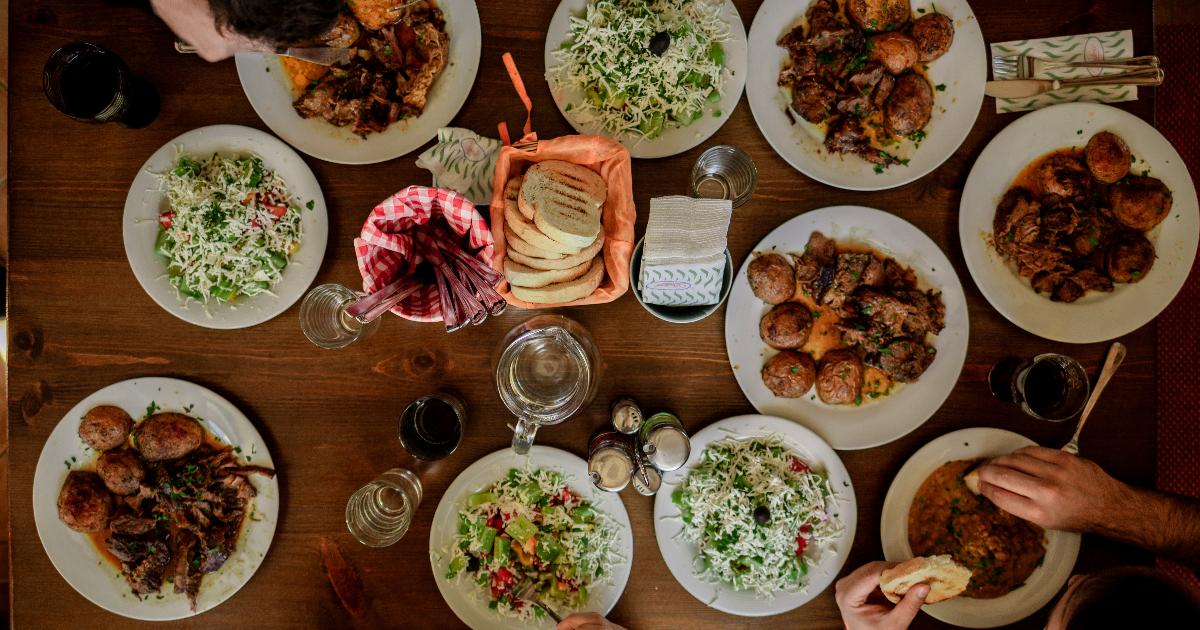
The dinner served four adults and a teenager and leaned on a deliberate blend of sources: discount-app finds, reduced-rack bakery items, garden herbs, pantry basics, and food contributed by relatives. Two whole chickens, wrapped in bacon and roasted with apple and orange, came from Flashfood purchases totaling $12. A $32 pumpkin cake was picked up through the same app for $10.24. Stuffing was built around a reduced-rack baguette bought for $1.34, plus garden herbs and a partial carton of broth.
Other elements cost the household nothing directly — sweet potatoes and apple crisp came as gifts from relatives — which matters for the math but doesn’t mean those foods had no value. A meal built this way is less a recipe and more a patchwork, assembled from whatever combination of deals, garden, and generosity a household happens to have access to that season.
Counting What You Actually Use, Not What You Bought
Here’s where the story offers its most transferable lesson: the family didn’t count whole packages toward the Thanksgiving total. When they bought a mystery produce bundle for $5 and only used part of it for the holiday meal, they allocated just that $5 portion to Thanksgiving — the rest went toward other meals. The same logic applied to a carton of broth, where only the portion actually used in the stuffing was counted.
Their running, documented subtotal came to roughly $38.31 for five people, or about $7.66 per person — but the family was clear that this is a working ledger, not a fully audited final number, since some pantry ingredients and service fees still needed small estimates added in. That distinction between an allocated, working cost and a complete, certified total is one every budgeter should hold onto: a partial tally is useful for tracking trends, but it shouldn’t be mistaken for the last word on what a holiday meal truly costs.
Turning the Story Into a Repeatable Method
Strip away the specific chicken and cake prices, and what’s left is a sequence any household can adapt, whether the holiday is Thanksgiving, a winter gathering, or a birthday dinner.
| Stage | What to do | Why it matters |
|---|---|---|
| Months before | Watch discount apps and reduced racks for relevant items as they appear | Spreads spending out instead of concentrating it into one expensive week |
| As deals appear | Freeze suitable bargains promptly and label them | Preserves quality so the saving isn’t lost to spoilage |
| 1–2 weeks before | Check the freezer and pantry before finalizing the menu | Builds the meal around what’s on hand instead of an idealized list |
| Few days before | Prep short-life items like chopped vegetables early | Prevents last-minute waste and panic shopping |
| Cooking day | Mix discount finds with pantry, garden, and gifted items | Keeps the meal realistic rather than dependent on one source |
| After the meal | Count only the portion of each purchase actually used | Produces an honest cost-per-person instead of an inflated or guessed figure |
| Following days | Plan a second meal from leftovers (like soup from bones) | Stretches the original purchase into more value |
The Part That’s Easy to Miss
A discount is only a saving if the food gets eaten before it spoils — a reduced-price chicken left to languish in the back of the freezer isn’t a bargain at all, it’s eventual waste. That’s why the freezer and the prep calendar matter as much as the app itself. Using discount tools doesn’t guarantee savings on every trip; it only pays off when it’s paired with timing, labeling, and a plan to actually use what was bought.
The family’s own leftover plan — turning chicken carcasses into soup after the holiday — is a small but telling example of this mindset. The $12 spent on chickens didn’t end at the dinner table; it was designed to stretch into a second meal, lowering the effective cost further without anyone keeping a second receipt.
Starting Your Own August Habit
None of this requires an app, a particular store, or a particular budget size — what it requires is a shift in timing and a willingness to track small portions instead of big packages. Start looking a few months out. Freeze what makes sense. Build the menu from what’s already there. And when the bill finally comes due, count only what actually ended up on the plate.
That’s not a promise of a cheap holiday. It’s a way of making sure the holiday’s cost is something you understand — and shaped — well before the first guest arrives.